For many people, remote work brings real benefits: no commute, more control over the day, fewer interruptions and more time with family. But it can also bring new challenges. The line between work and home blurs, days can pass without leaving the house, it's easy to sit for hours without moving, and some people feel isolated or find it hard to switch off.
This guide covers practical ways to stay healthy, connected and balanced when you work remotely, your rights around disconnecting, and where to find support.
Routine
Structure the day
Start, breaks, finish
Move
Break up sitting
Regularly through the day
Disconnect
A workplace right
Outside working hours
Build a routine
Without a commute and office hours to shape the day, structure has to come from you. A routine helps you focus during work time and switch off afterwards.
- Start and finish at set times. Decide when your working day begins and ends, and stick to it as much as you can.
- Create a start ritual. A walk, a coffee or getting dressed for work can replace the commute and signal the start of the day.
- Create a finish ritual. Shut down your computer, pack away your work and do something that marks the end of the day, such as a walk or exercise.
- Plan your day. Block time for focused work, meetings and breaks.
Move more
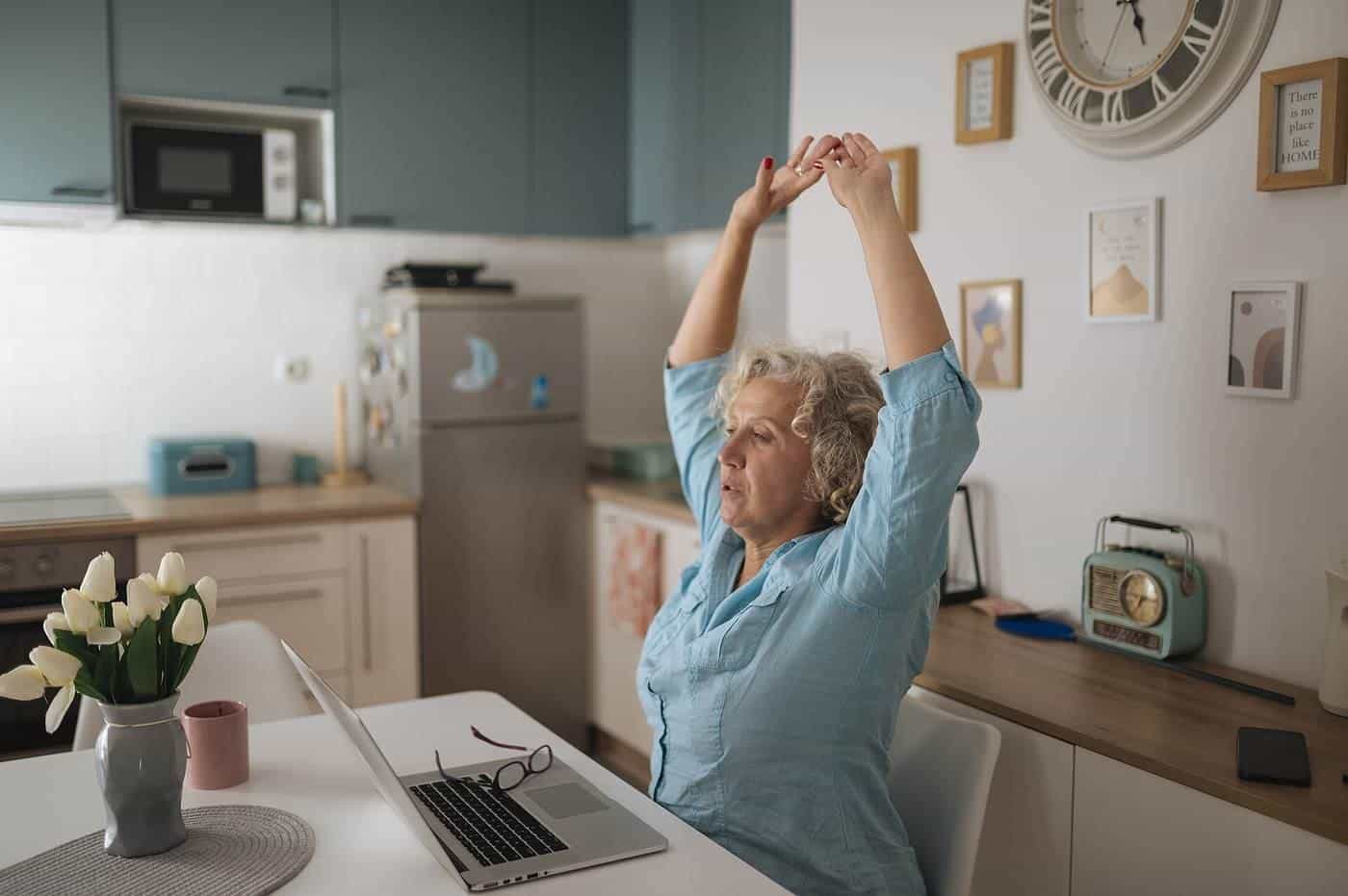
Working from home can mean much less incidental movement: no walking to the station, between meetings or to lunch. Long periods of sitting are linked to health problems. The Australian physical activity guidelines recommend being active on most days and breaking up long periods of sitting as often as possible.
Ideas for moving more:
- Stand up and move every half hour or so, even briefly.
- Take phone calls standing or walking.
- Use a sit-stand desk or vary your posture.
- Go for a walk at lunchtime or before and after work.
- Do stretches between tasks.
Set boundaries
When your home is your office, work can creep into evenings, weekends and family time. Boundaries protect your rest and relationships.
- Separate your space. Work from a dedicated area if you can, and leave it at the end of the day.
- Turn off notifications. Mute work apps outside working hours, or use separate devices or profiles for work.
- Agree on expectations. Talk to your manager and team about response times and availability.
- Communicate your hours. Show your working hours in your calendar and chat status.
- Tell your household. Let family or housemates know when you need quiet or can't be interrupted.
The right to disconnect
The Fair Work Act includes a right to disconnect. Employees can refuse to monitor, read or respond to contact, or attempted contact, from their employer outside their working hours, unless the refusal is unreasonable. Contact from third parties, such as clients, relating to work is also covered. The right applies to employees of non-small business employers from 26 August 2024, and to employees of small business employers from 26 August 2025.
Whether a refusal is unreasonable depends on factors such as the reason for the contact, how it's made, how disruptive it is, whether you're compensated for being available, your role and your personal circumstances. The right doesn't stop employers from contacting employees; it protects employees who reasonably choose not to respond. The Fair Work Ombudsman has detailed guidance.
Stay connected
Isolation is one of the most common challenges of remote work. Feeling disconnected from colleagues can affect your wellbeing, motivation and career.
- Schedule regular contact. Have regular check-ins with your manager and team.
- Use video sometimes. Seeing faces helps build relationships, though not every conversation needs video.
- Make time for informal chat. Virtual coffee catch-ups or social channels can replace hallway conversations.
- Meet in person when you can. Office days, team gatherings or coworking can help.
- Keep up life outside work. Exercise, hobbies, friends and community activities matter even more when work is solitary.

Psychological health and safety
Work health and safety laws cover psychological as well as physical health, including when you work from home. According to Safe Work Australia, employers must manage psychosocial risks so far as reasonably practicable. For remote workers, these can include isolation, high workloads, unclear expectations, poor support, long hours and difficulty switching off. If you're struggling, talk to your manager, your health and safety representative or your employer's employee assistance program if it has one.
Managing distractions
Home brings its own distractions: household tasks, family members, pets, deliveries and the temptation of the fridge. Plan your most demanding work for times when you're least likely to be interrupted, use headphones, and agree on signals with your household for when you can't be disturbed. Accept that some interruptions are part of home life.
Caring responsibilities
Working from home can make it easier to manage caring responsibilities, but it's not a substitute for childcare or care arrangements. Trying to work and care at the same time can be exhausting. Talk to your employer about flexibility in hours as well as location, and consider making a formal request for flexible working arrangements if you're eligible.
Signs you need a change
Watch for warning signs such as working longer and longer hours, difficulty sleeping, feeling constantly tired or irritable, losing interest in things you enjoy or feeling cut off from others. If you notice these, take them seriously. Talk to someone you trust, adjust your routine, and seek support.
Where to get support
- Your GP can help with physical and mental health concerns and refer you to other services.
- Employee assistance programs, offered by many employers, provide free, confidential counselling.
- Beyond Blue offers information and support for anxiety and depression.
- Lifeline provides 24-hour crisis support.
- In an emergency, call 000.
Ending the working day
Create a small ritual to mark the end of work: close the laptop, tidy the desk, write tomorrow's top task on a note, then go for a short walk. A clear finish helps your mind switch off.
Staying connected to colleagues
Isolation creeps up gradually. Make a point of having some conversations that are not about tasks: a short virtual coffee, a chat channel for non-work topics or a regular call with a teammate. If you are hybrid, use office days for collaboration and catching up with people, and save focused solo work for home. If you notice yourself withdrawing, feeling low for weeks or dreading work, talk to someone you trust, your GP or an employee assistance program if your workplace offers one.
Key points
Build a routine with clear start and finish times, move regularly, set boundaries between work and home, and stay connected with colleagues and friends. Know your right to disconnect, remember that psychological health is part of work health and safety, and seek support early if you're struggling.
Frequently asked questions
What is the right to disconnect?
Under the Fair Work Act, employees can refuse to monitor, read or respond to contact, or attempted contact, from their employer or a third party outside working hours, unless refusing is unreasonable. It applies to employees of non-small business employers from 26 August 2024 and of small business employers from 26 August 2025.
How do I stop working too much at home?
Set clear start and finish times, take breaks, turn off notifications after hours, pack away your work at the end of the day and agree on response expectations with your team.
How can I feel less isolated?
Schedule regular contact with colleagues, use video for some conversations, join in team rituals, consider coworking or days in the office, and keep up social activities outside work.
Does my employer have to care about my mental health at home?
Yes. Work health and safety duties cover psychological as well as physical health, including when you work from home.
Where can I get support?
Talk to your GP, your employer's employee assistance program if there is one, or services such as Beyond Blue and Lifeline. In an emergency, call 000.
Sources and further reading
Facts on this page were checked against these primary and official sources. Conditions change — confirm before you travel or buy.
- Working from home overview — Safe Work Australia
- Right to disconnect — Fair Work Ombudsman
- Beyond Blue — Beyond Blue
- Lifeline — Lifeline Australia
- Physical activity guidelines — Department of Health